
Solar Inverters The Brain & Engine of Your Solar Power System
The solar inverter converts raw DC power generated by solar panels into usable 230V/415V AC electricity for your home or business, synchronizing seamlessly with the APDCL grid.
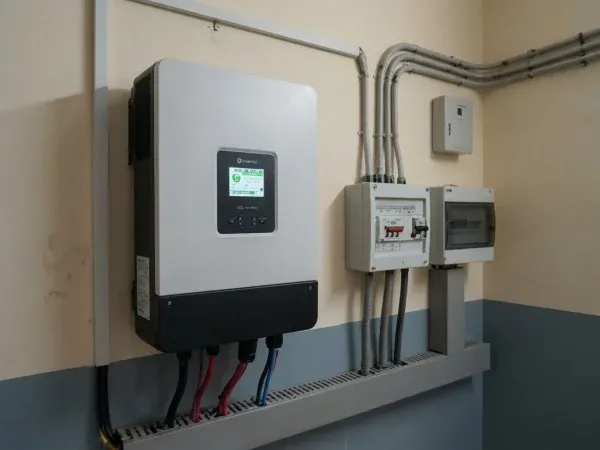
Solar Inverter Types Compared
| Inverter Type | Grid Connection | Battery Backup | Subsidy Eligible | Best Suited For |
|---|---|---|---|---|
| On-Grid String Inverter | Direct APDCL Net Meter | No (Shuts off during outage) | Yes (PM Surya Ghar) | Homes and businesses with stable grid power seeking zero bills |
| Hybrid Solar Inverter | Bi-directional Grid Export | Yes (Lithium / Tubular) | Yes (On solar portion) | Areas with frequent load-shedding wanting 24/7 backup + net metering |
| Off-Grid Inverter / PCU | No Grid Feed-In | Mandatory | No | Remote sites, agricultural estates, tea gardens without stable grid |
Critical Factors When Choosing an Inverter
1. Maximum Power Point Tracking (MPPT)
Modern multi-MPPT tracking extracts maximum energy from panels even during partial cloud cover or morning/evening sun angles common across Assam.
2. High Efficiency & Low Standby Loss
Top-tier inverters achieve over 98% conversion efficiency with transformerless topologies, meaning virtually all generated power reaches your appliances.
3. IP65 Weather Protection & Thermal Management
Inverters must feature robust IP65-rated waterproof enclosures and die-cast aluminium heat sinks to withstand Assam's humid, rainy, and high-heat summers.
4. Wi-Fi & Smart Mobile App Monitoring
Track live daily power generation, grid export units, lifetime savings, and receive automated diagnostic alerts right from your smartphone.
Why Inverter Quality Decides Long-Term ROI
The inverter is the active electrical core of your system. While solar panels are passive semiconductors with no moving parts, the inverter handles high voltages, grid synchronization, and daily power cycles. Choosing a Tier-1 inverter backed by local Guwahati service ensures uninterrupted generation for 15+ years. Explore our Solar Inverter Guide or contact our technical team for system sizing.
Related pages
FAQ
Common questions
What does a solar inverter do in a rooftop system?
The inverter is the brain of your solar installation. It converts raw Direct Current (DC) produced by solar panels into synchronized 230V/415V Alternating Current (AC) electricity for home appliances, tracks peak power points (MPPT), and safely disconnects during power outages (anti-islanding) to protect grid technicians.
Which inverter type is right for Assam homes — On-Grid or Hybrid?
For homes with reliable APDCL power aiming to reduce electricity bills to zero and claim the PM Surya Ghar subsidy, On-Grid string inverters offer the fastest payback. If you face frequent power cuts and require battery backup for nighttime loads, a Hybrid inverter paired with LiFePO4 batteries is the recommended choice.
What is MPPT and why is Dual MPPT important for rooftops in Assam?
Maximum Power Point Tracking (MPPT) continuously optimizes voltage and current for peak energy yield. Dual MPPT allows panel arrays facing different directions (such as South and East/West roof slopes) to generate electricity independently without shading on one roof reducing output on the other.
How long do solar inverters last, and how are they serviced in Guwahati?
High-grade solar inverters have an operational lifespan of 10 to 15+ years. Sewaro Energy provides authorized local warranty handling, rapid diagnostics, firmware updates, and prompt replacements from our Guwahati support center.
Ask about inverter options
Share a few details and our team will help you size the right system. No obligation.
Sewaro Energy service information
Tell us about your roof and electricity use. We'll recommend the right system and handle subsidy and net-metering paperwork where applicable.
Ready to power your home with solar? engineered to last.
Tell us about your roof and your electricity bill. We'll help you size the right system and handle the subsidy and net-metering paperwork.