
EVA Sheet Photovoltaic Cell Encapsulation & Weatherproofing Material
Ethylene Vinyl Acetate (EVA) sheets are high-transmittance encapsulant polymers laminated on both sides of solar cells, hermetically sealing them against moisture, UV degradation, and mechanical vibration for 25+ years.
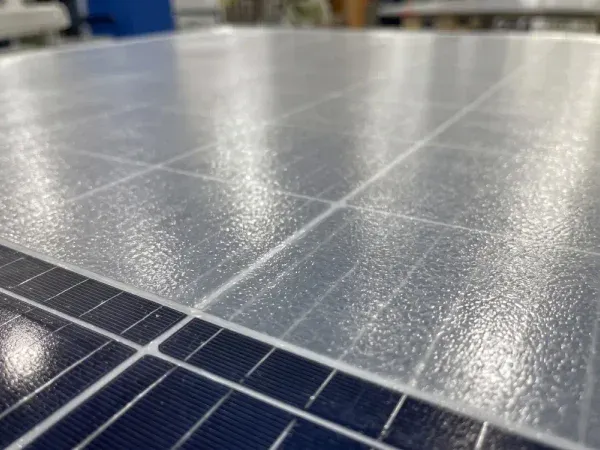
The Role of EVA in Photovoltaic Modules
| Encapsulant Film Layer | Position in Panel | Primary Function |
|---|---|---|
| Front EVA Film | Between Front Tempered Glass and Solar Cells | High optical transmission (>91.5%), UV protection, mechanical cushioning |
| Rear EVA / POE Film | Between Solar Cells and Backsheet / Rear Glass | Electrical insulation, high volume resistivity, hermetic moisture seal |
Why Encapsulation Quality Matters
1. 100% Hermetic Moisture Ingress Barrier
High gel content prevents atmospheric moisture from reaching silicon busbars, preventing metal corrosion and snail trails in humid regions.
2. Zero Delamination Over 25–30 Years
Superior thermal adhesive properties ensure glass and backsheet remain permanently bonded despite extreme daily thermal expansion cycles.
3. High UV & Thermal Degradation Resistance
Advanced anti-aging additives prevent polymer discoloration or yellowing, maintaining over 91% optical transmission for decades.
4. High Dielectric Strength & PID Prevention
High volume electrical resistivity prevents leakage current from frame to ground, shielding high-voltage PV strings against PID power loss.
Industrial Supply & Manufacturing Resources
To learn how EVA sheets are layered and cured during module fabrication, read our guide on How Solar Panels Are Made. For complete Tier-1 modules ready for rooftop deployment, browse our Solar Panels page, or reach out directly on our contact page.
Related pages
FAQ
Common questions
What is the role of an EVA sheet inside a solar photovoltaic module?
During vacuum lamination at ~150°C, the EVA film melts and polymerizes, forming an optically clear, elastic cushion around fragile silicon cells. It permanently bonds front tempered glass, solar cells, and rear backsheets together.
How does EVA film quality prevent solar panel degradation in humid climates like Assam?
High-gel-content EVA creates an impermeable barrier against humidity and oxygen. Low-quality EVA causes yellowing (browning), PID (Potential Induced Degradation), and delamination, drastically reducing electricity generation.
What is the difference between standard EVA and POE (Polyolefin Elastomer)?
While standard Fast Cure EVA is the industry standard for front-side encapsulation, POE or Dual-Glass EVA is preferred for TOPCon and Bifacial modules due to superior anti-PID resistance and ultra-low water vapor transmission rate (WVTR).
Does Sewaro Energy supply EVA film for commercial manufacturing or repair?
Yes, we supply certified solar module raw materials and encapsulant films for commercial manufacturers, module assembly units, and industrial clients across Northeast India.
Discuss an EVA sheet requirement
Share a few details and our team will help you size the right system. No obligation.
Sewaro Energy service information
Tell us about your roof and electricity use. We'll recommend the right system and handle subsidy and net-metering paperwork where applicable.
Ready to power your home with solar? engineered to last.
Tell us about your roof and your electricity bill. We'll help you size the right system and handle the subsidy and net-metering paperwork.